

Remote observation is hardest exactly when it matters most. Fog, snow, pollution, fire and smoke all degrade what an optical camera can see, and a pilot approaching a runway in poor visibility has the least margin for error.
No single sensor solves this. Optical cameras carry rich detail in clear air but fail in smoke and low light. Infrared sees heat through haze and darkness but lacks fine texture. A 3D model of the airfield fixes exactly where the runway is but records nothing about current conditions. The group’s approach is to fuse all three.
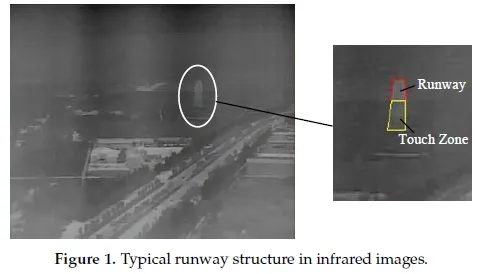
Typical runway structure in an infrared image. Even when optical visibility drops, the runway and its touchdown zone stay detectable in the thermal band.
Infrared holds the runway’s thermal structure when the optical view is washed out, and the optical channel adds detail once the air clears. A registered 3D model anchors both to known geometry, so the runway and its touchdown zone can be located and tracked continuously through changing conditions.
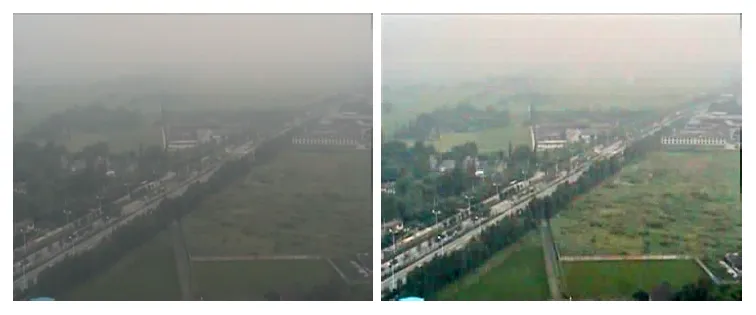
The same ground, seen through haze. For remote observation from the air, degraded visibility is the normal case, not the exception.
The same fusion idea generalises well beyond aviation: any task where one sensor fails and another sees through the failure, from search over smoke-covered terrain to autonomous navigation at night. It is remote observation treated as one discipline, reading whatever signal gets through.