
Remote observation does not stop at the edge of a satellite frame. On the ground, the same perception that reads a scene from orbit guides a robot arm to pick an object off a table. The sensor sits close, but the observer is still a machine reading pixels and depth.
The core question is how to turn what the camera sees into a reliable grasp. The group works on two complementary approaches:
- Multi-view (optical sensor). Several ordinary camera views of the same object are combined to infer its shape and pose. Rich in texture and colour, and cheap to capture.
- Point-cloud (depth sensor). A depth camera returns the object’s geometry directly as 3D points, robust to lighting and texture but sparser in appearance.
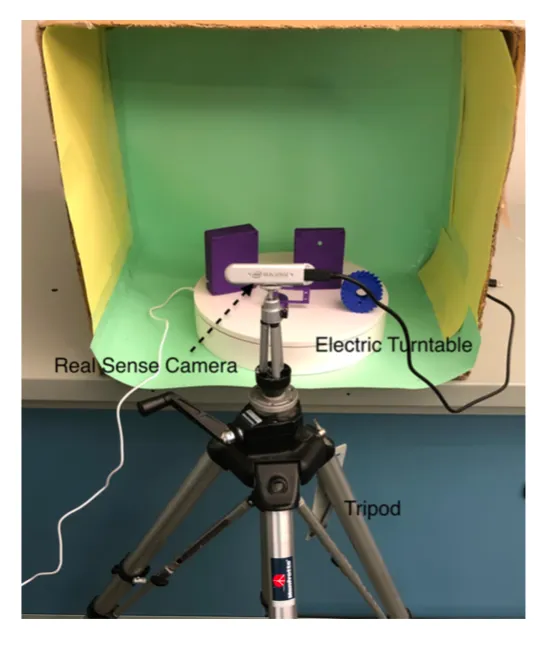
A capture rig: a depth camera and a turntable record each object from every angle, providing the raw material for both the multi-view and point-cloud pipelines.
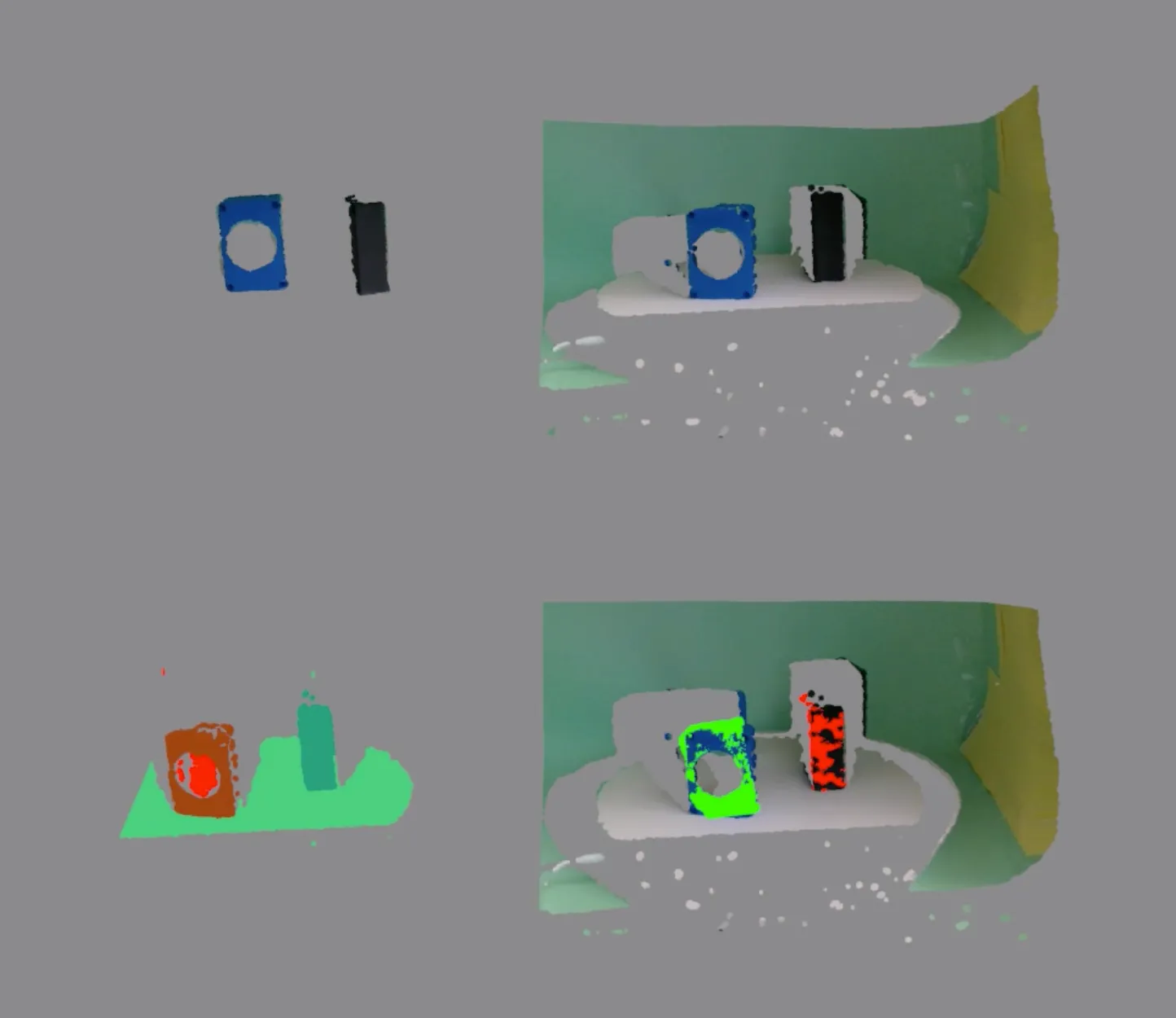
The same objects seen two ways. Optical multi-view carries appearance; the depth point-cloud carries geometry. Together they locate an object well enough to grasp it.
Once the object is located, the arm executes the pick and place.
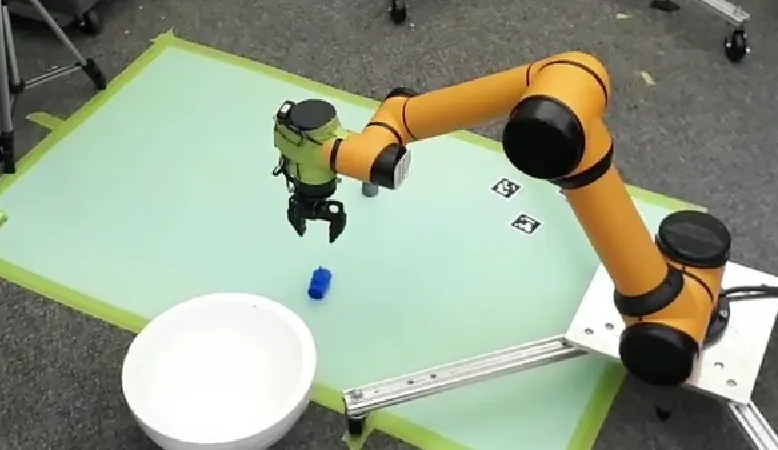
From perception to action: the arm picks and places automatically, guided entirely by what the sensors see.
The trade-off between appearance and geometry runs through all of remote observation, from LiDAR point clouds on a city street to a single object on a bench. The right answer is usually to use both.