

Some of the most valuable remote observation happens indoors, at arm’s length. In a long-term care facility, continuous monitoring can catch a fall or a change in vital signs long before the next staff round. The challenge is doing it without turning a resident’s room into a surveillance camera.
Privacy is the design constraint, not an afterthought. Rather than store video, the group extracts a skeleton: the joints and limbs of a body reduced to moving points. A fall is clear in the skeleton’s motion, but the person is not identifiable from it.
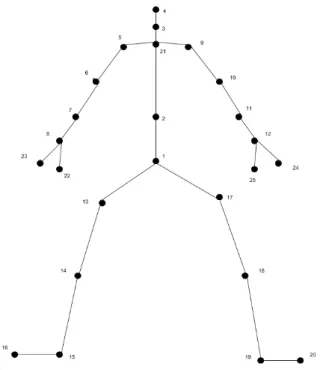
Joint and skeleton extraction. Movement and posture are preserved; identity is not.
Everything runs on the edge. In a fielded Mitacs project, the video is processed locally inside a secured, locked box in the room, so raw imagery never leaves the premises. Only the result (a fall event or alert) is sent onward to a mobile app for a caregiver.
The same signals carry health information beyond safety. Contact-free sensing yields vital-sign traces that can be tracked over time, for several residents at once.
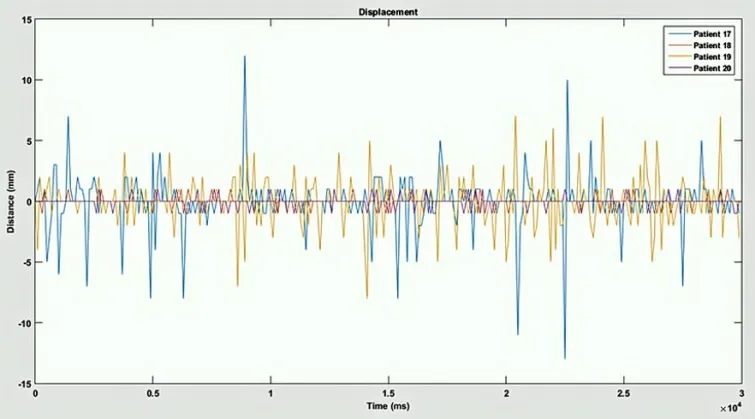
Vital-sign traces recorded over time. Long-baseline signals like these turn a single alert into a picture of trend and change.
Watching for a fall, reading a pulse, raising an alert: it is the same acquire, analyse, transmit loop as satellite monitoring, moved indoors and built to protect the person it watches.