

Healthy pasture underpins food security, soil health and farmer livelihoods, and rotational grazing stays sustainable only when the forage each paddock carries is known. Today that knowledge comes from manual monitoring: NIR spectroscopy tablets, rising plate meters, sensor-equipped ground vehicles driven across the field.
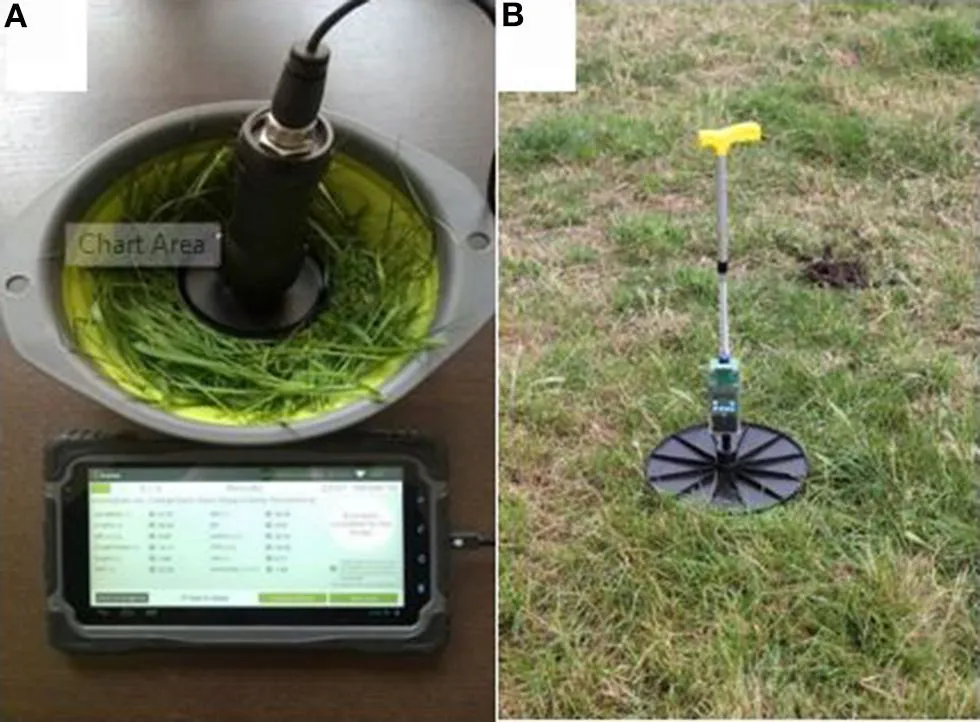
Manual monitoring today: NIR spectroscopy tablet and rising plate meter.
The group replaces that with remote sensing. Sentinel-2 multispectral imagery captures the spectral signatures of vegetation, so pasture health can be assessed from orbit rather than on foot, with drones filling in where finer detail is needed.
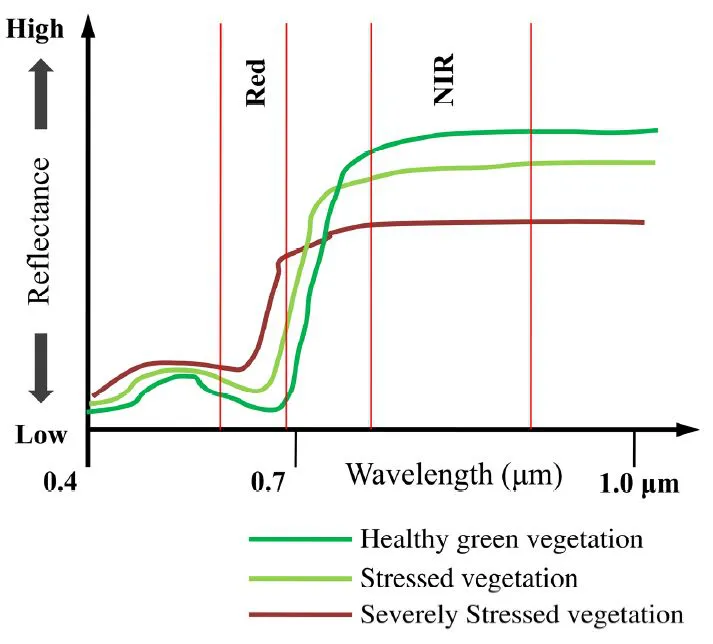
Spectral reflectance of healthy, stressed and severely stressed vegetation.
The smart-grazing workflow ties it together: satellite remote-sensing imagery plus field biomass data feed feature extraction, model training and validation, producing biomass estimates that inform the grazing strategy itself.